Odor can provide useful information about spoilage, although it isn’t a perfect safety test.
A properly cooked beef roast should have the expected savory aroma associated with the meat and ingredients used in the recipe.
If you encounter a distinctly abnormal, rotten, or otherwise strongly unpleasant odor, take that seriously.
Don’t taste suspicious meat simply to determine whether it’s safe.
When in doubt, throwing away one roast is far preferable to risking foodborne illness.
Don’t Judge Safety by Color Alone
Color can also be misleading.
Raw and cooked beef can display different shades depending on oxygen exposure, cooking method, ingredients, temperature, and other factors.
That’s why statements such as “red means fresh” or “brown means safe” are oversimplifications.
For cooked meat, a food thermometer provides much more useful information than color alone.
Use a Food Thermometer
A food thermometer is one of the most useful tools in a kitchen.
Instead of guessing whether meat reached an appropriate temperature based on its color or texture, you can actually measure it.
For whole cuts of beef, follow recognized food-safety guidance for minimum internal temperatures and resting time.
Remember, however, that slow-cooker recipes designed to make tough roasts fall-apart tender often cook the meat considerably beyond the minimum temperature needed for basic food safety.
That’s because tenderness and minimum safe temperature are two different questions.
A tough roast needs enough time for connective tissue to soften.
Why Tough Beef Cuts Work So Well in a Slow Cooker
The exact feature that can make a raw roast seem less appealing—its connective tissue—is one of the reasons it can become so delicious after slow cooking.
Cuts rich in collagen can start relatively tough.
Give them sufficient time in a moist cooking environment, and their texture changes.
The meat becomes easier to shred, while gelatin contributes richness to the cooking liquid.
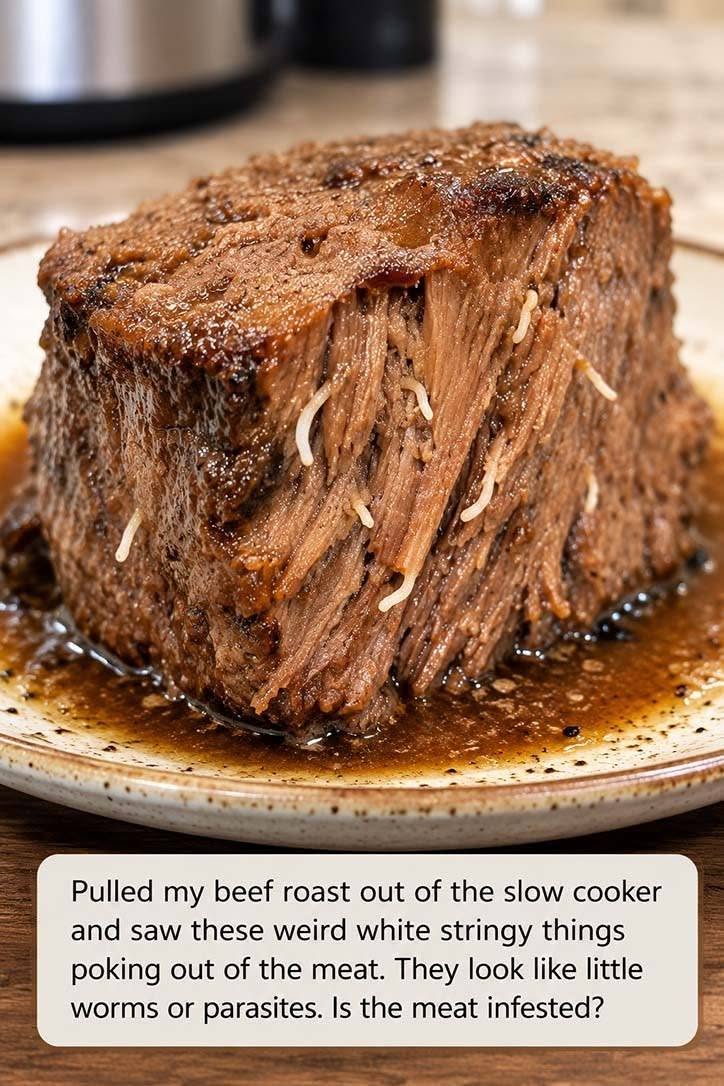
So those strange-looking pale pieces may actually be connected to the process responsible for the texture you wanted.
Fat Can Also Look Strange
Connective tissue isn’t the only pale material you may encounter.
Beef naturally contains fat.
After cooking, some fat may remain white or cream-colored, while other portions render into the cooking liquid.
Depending on the cut and temperature, cooked fat can appear soft, gelatinous, stringy, or waxy.
Again, context matters.
Not every pale object in cooked beef is the same thing.
Why Social Media Makes This Look Scarier
Continued on next page: