If strange white strands have appeared, consider the entire situation.
Where did the meat come from?
Was it purchased from a reputable source?
Was it stored properly?
Did it remain refrigerated or frozen as appropriate?
Was it thawed safely?
Avoid unsafe extended room-temperature thawing.
Did it smell normal before cooking?
Obvious spoilage odors deserve attention.
Was it cooked properly?
Use appropriate time and temperature guidance.
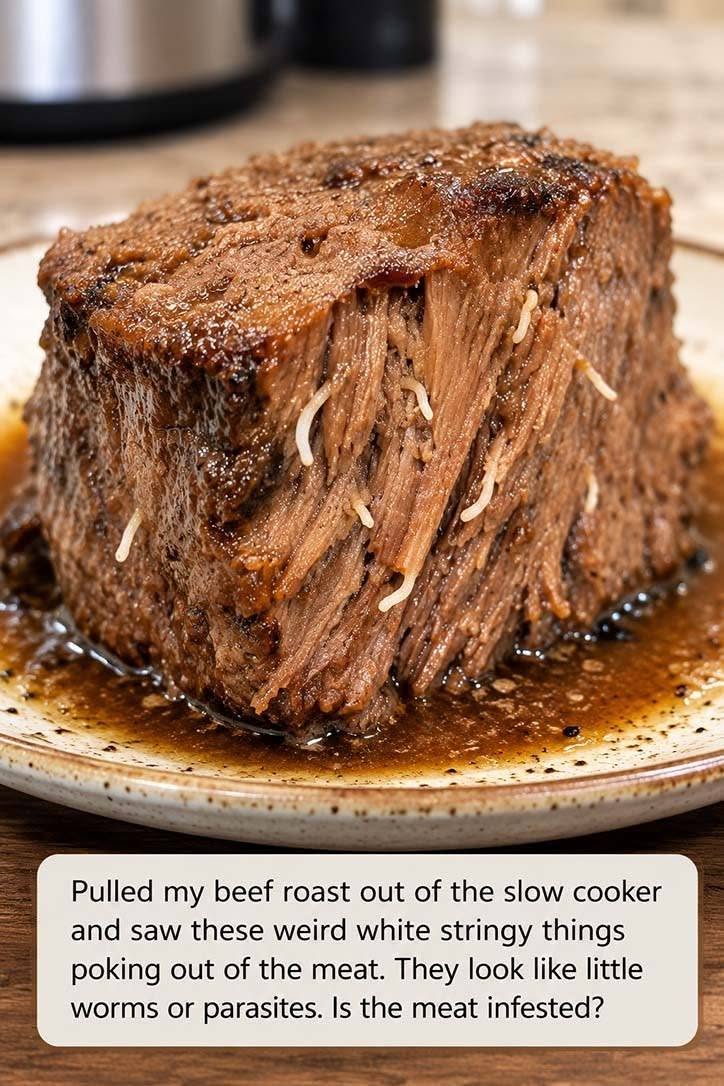
What do the white strands look like?
Are they irregular and integrated with the meat’s natural fibers and connective tissue?
Is anything else unusual?
One unexpected visual feature is very different from multiple signs that something may be wrong.
The Biggest Mistake to Avoid
The biggest mistake isn’t necessarily eating a harmless strand of collagen.
It’s relying on one visual clue to make a complete food-safety decision.
Food safety is rarely that simple.
A roast can contain completely normal white connective tissue.
A piece of meat can also look normal and still have been stored improperly.
That’s why safe purchasing, refrigeration, thawing, preparation, cooking, and leftover storage all matter.
The Bottom Line
Finding strange white strings sticking out of a slow-cooked beef roast can be alarming, especially when they resemble tiny worms.
But in many ordinary slow-cooked roasts, pale stringy or gelatinous material can be part of the beef’s natural connective tissue and collagen becoming more visible as the meat cooks and softens.
Slow cooking changes the structure of collagen and contributes to the tender texture people love in cuts such as chuck and brisket.
That doesn’t mean every unusual object found in meat should automatically be declared harmless.
If the beef shows signs of spoilage, was stored improperly, comes from an uncertain source, or contains something you genuinely cannot identify, caution is appropriate.
But when a properly handled roast smells normal, has been cooked correctly, and simply develops irregular pale strands among the softened muscle fibers, the explanation may be much less frightening than it first appears.
Sometimes what looks alarming on your dinner plate is simply the hidden structure of the meat becoming visible after hours of slow cooking.
And understanding that difference can save a perfectly good dinner from being thrown away for the wrong reason.