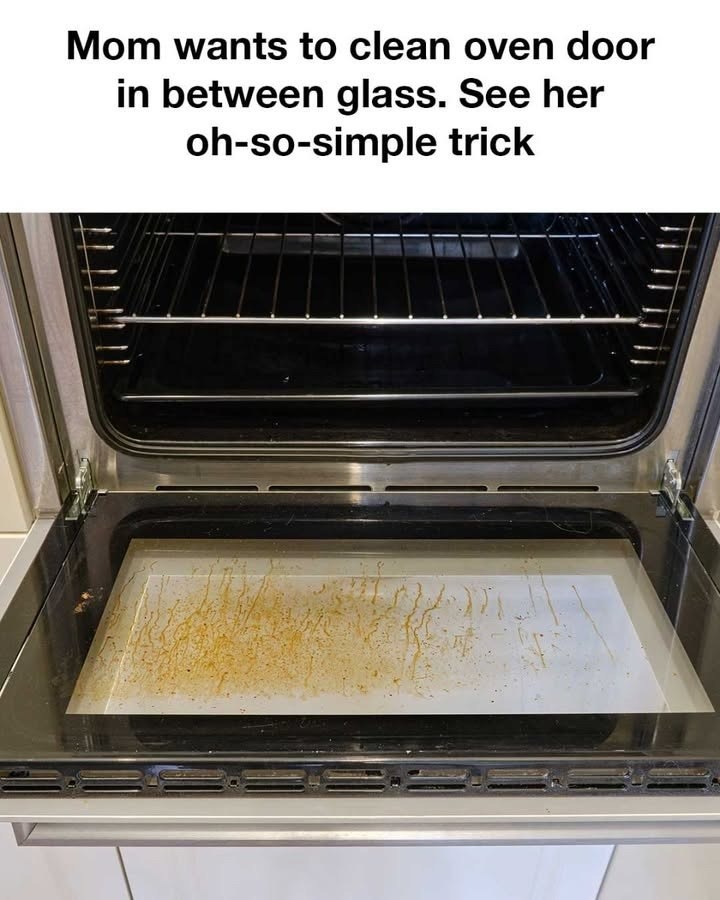
The oven must be completely switched off and cold. Never attempt this cleaning immediately after cooking or while any surface feels warm.
If practical, unplug the appliance. For a built-in oven that cannot easily be unplugged, switch off the relevant circuit only when you know how to do so safely. The goal is to prevent the oven from being activated while you are working near the door.
Open the door fully and place a folded towel beneath it to catch drips. Remove nearby trays, racks, and loose objects so that you have enough room to work.
Inspect the top and bottom edges of the door with a flashlight. Look for long ventilation slots or small openings wide enough for a cloth-covered tool. Do not insert the tool yet. First determine where it would enter and whether there is a clear path between the panels.
If you see electrical wires, loose insulation, broken glass, or damaged seals, stop. Those conditions require professional attention.
Make a Slim Cleaning Wand
Choose a tool that is long enough to reach most of the glass but not so rigid that it could apply excessive pressure. A flat plastic ruler or a slim silicone spatula is often easier to control than a hard rod.
Fold a clean microfiber cloth around one end. The cloth should cover every edge of the tool so that no hard surface touches the glass. Secure it firmly with rubber bands or string.
The cloth must not be bulky. If the wrapped end is too thick, it can become wedged in the narrow space. It should fit through the opening without force.
Pull gently on the cloth before inserting the tool. Make sure it cannot slip off. A loose cloth falling between the glass panels may require the door to be dismantled for removal.
Prepare a second wand with a dry cloth if possible. One will be used for washing and the other for drying.
Mix a Gentle Cleaning Solution
Fill a small bowl with warm water and add only a few drops of mild dishwashing liquid. Stir gently.
The cloth should be slightly damp, not wet. Soak the covered end, then squeeze it thoroughly until no water drips from it. Too much liquid can run into the bottom of the door, affect insulation, leave new streaks, or reach components that should remain dry.
Strong oven cleaner is generally unnecessary for this task. It may leave fumes or residue in an enclosed space, damage coatings, and be difficult to rinse away. Avoid bleach, ammonia, abrasive powders, and highly acidic cleaners.