Step 1: Recognize the Modern Symbol:
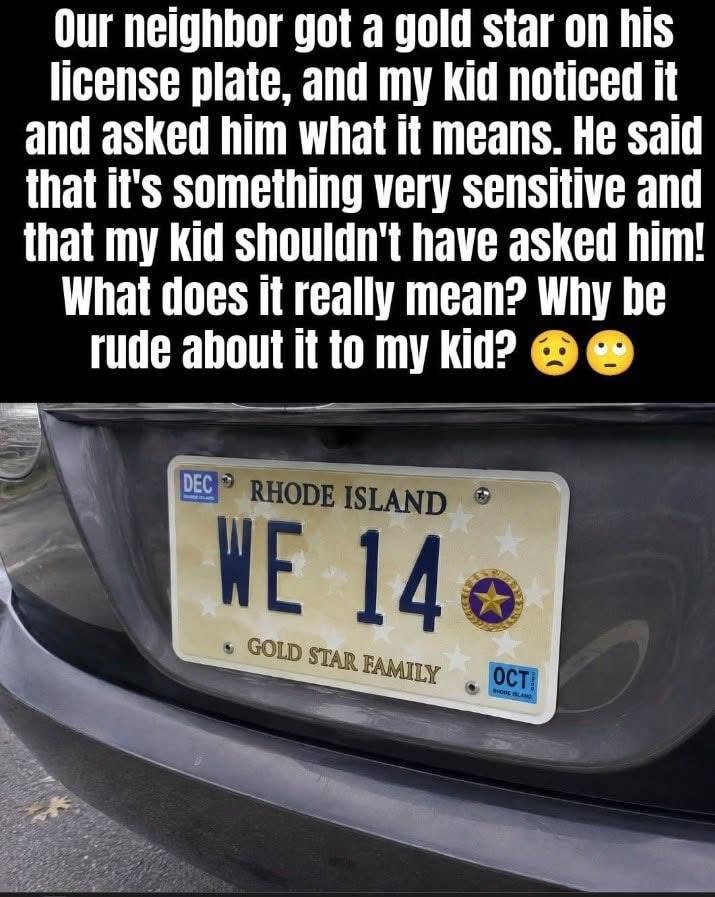
Step 1: Recognize the Modern Symbol Today, a Gold Star on a license plate is a state-issued designation. It is a solemn, daily reminder of the dedication and character of a fallen service member. When you see it, you are looking at a family that has paid the highest price for our freedom.
Step 2: Trace the Roots to the Blue Star This tradition didn’t start on a license plate; it started in a window. In 1917, during World War I, Army Captain Robert L. Queisser of the Ohio 5th Infantry wanted to honor his two sons serving on the front lines. He designed the “Blue Star Service Banner”—a white flag with a red border and a blue star in the center, with each star representing a serving family member. He hung it proudly in his window, and soon, military families across the country were doing the same.
Step 3: Understand the Shift to Gold Tragically, not every service member came home. The Women’s Committee of the Council of National Defense proposed a new way to honor those who made the ultimate sacrifice. They suggested that mothers wear a black armband featuring a gold star for each fallen loved one. This poignant proposal was officially approved by President Woodrow Wilson in May 1918, forever linking the gold star with profound loss and enduring pride.
Step 4: Acknowledge the Mothers Who Kept the Flame Alive A decade later, in 1928, 25 grieving mothers traveled to Washington, D.C., to officially establish American Gold Star Mothers, Inc. They amended the blue-starred service banners by adding gold stars, ensuring their children’s sacrifices would never be forgotten. In 1936, Congress officially declared the last Sunday of September as “Gold Star Mother’s Day,” a lasting testament to their enduring legacy.
Pro-Tips for Everyday Respect
Let them lead the conversation: If you know someone with a Gold Star plate, do not ask them about it unless they bring it up first. Grief is deeply personal, and they may not always have the emotional energy to explain their loss to strangers or acquaintances.
Educate with gentleness: If your child asks about a Gold Star plate you see in public, use it as a quiet, teachable moment. You might say, “That star means someone in their family was a hero who protected our country, and we are very grateful for them.”
Look beyond the plate: Remember that the driver is a whole person, not just a symbol of their grief. Treat them with the same warmth, patience, and kindness you would offer any neighbor.
Variations and “Serving” Ideas: How to Support Gold Star Families
Want to turn your awareness into meaningful action? Here are a few gentle, practical ways to “serve” support to the families in your community:
The “Quiet Neighbor” Variation: You don’t need to make a grand speech to show you care. A simple, handwritten note saying, “I see your Gold Star plate, and I am so grateful for your family’s sacrifice. I’m keeping you in my thoughts,” left anonymously or signed simply, can be incredibly comforting. are meant to be shared. If your community or church is organizing a meal train or a support network for a grieving military family, sign up to bring a casserole, mow their lawn, or run an errand. Tangible help lightens the heaviest loads.
The “Active Listener” Route: If a Gold Star family member does choose to share a memory of their loved one with you, your only job is to listen. You don’t need to fix their grief or offer platitudes. Simply saying, “Thank you for sharing that with me. They sound like an incredible person,” is a powerful gift.
Frequently Asked Questions
Who is eligible to get a Gold Star license plate? Eligibility varies significantly from state to state. In most states, immediate family members—such as parents, spouses, siblings, and children—are eligible to apply. Some states have expanded this honor to include grandchildren or other legal dependents. It is always best to check the specific requirements with your local Department of Motor Vehicles (DMV).
What is the difference between a Blue Star and a Gold Star? A Blue Star represents a family member who is currently serving in the armed forces. A Gold Star represents a family member who has died in the line of military duty. The gold star is essentially a blue star that has been transformed by sacrifice.
Is it ever okay to ask a stranger about their Gold Star plate? As a general rule, no. While your intentions may be rooted in gratitude or curiosity, it can force a grieving person to relive their trauma in an uncontrolled, public setting. The most respectful thing we can do is acknowledge the symbol silently and carry that gratitude with us.
A Final Thought
In our fast-paced world, it is so easy to speed past the details that matter most. But taking a brief moment to understand the quiet meaning behind a Gold Star license plate is a beautiful act of remembrance. It connects us to a century-old tradition of love, loss, and unwavering pride.
The Gold Star Mothers and families are the ones who keep this sacred tradition alive, ensuring we never forget the sacrifices their loved ones made. By carrying this knowledge in our hearts, we honor them right back.
Have you ever noticed a Gold Star plate and wondered about its history? Or do you have a gentle, meaningful way you like to show appreciation for military families in your community? Drop a comment below and share your thoughts—I would absolutely love to read your stories and learn from your wisdom. And if you believe this is a history everyone should know, please share this article with a friend or neighbor. Here’s to quiet respect, enduring love, and a community that remembers.
The Quiet Meaning Behind a Gold Star License Plate: A Story of Sacrifice, Love, and How We Can Honor It… See more