It’s always better to have a false alarm than to be late.
What to do immediately
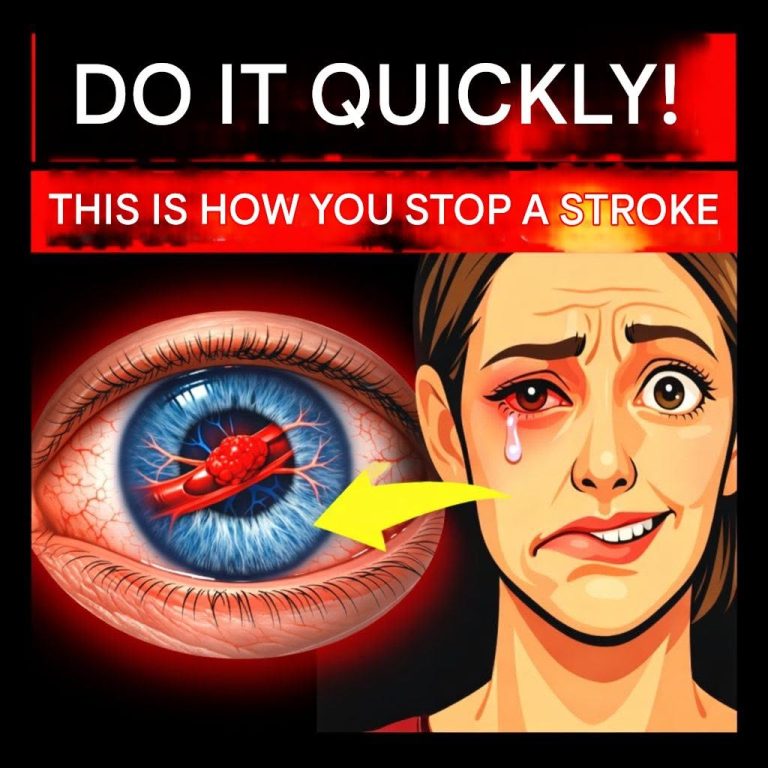
Call 911 immediately. Do not attempt to move the person on your own if an ambulance can arrive quickly. The paramedics notify the hospital and activate special protocols.
Write down the exact time your symptoms began. This information is essential to decide on treatment.
Go to a hospital with a CT scan and neurological guard, preferably a large one or with a stroke unit.
What NOT to do
Do not give water or food. Many people with effusion lose the ability to swallow and are able to breathe fluids into their lungs.
Not lowering blood pressure on your own. In the first few hours, higher pressure can help blood reach the brain.
Do not prick fingers or use “home remedies”. They have no scientific basis and only waste valuable time.
Why the first 4 hours are decisive
In ischemic strokes, there is a medicine called a thrombolytic that can dissolve the clot and reopen the artery. It is very effective, but can only be used inside the golden window. After that time, the risk of serious bleeding increases.
In some cases, doctors may also perform a mechanical thrombectomy, inserting a catheter through the groin into the brain to physically remove the clot. This technique increases the chances of recovery when you arrive in time.
The best strategy: prevent
The good news is that up to 8 out of 10 strokes can be prevented with simple habits:Control blood pressure. It is the main risk factor. Measuring regularly and following medical indications is key.
Detect arrhythmias, especially atrial fibrillation, which promote the formation of clots.
Take care of cholesterol and sugar, reducing ultra-processed foods, refined flours and simple sugars.
Move your body every day. At least 40 minutes of physical activity combining cardio and strength, adapted to each age.
Tips and recommendations
Learn and teach the RUN rule to your family.
Have emergency numbers handy.
Prioritize annual medical checkups, especially after age 60.
Maintain an active lifestyle; Exercise is one of the best preventive tools.
When in doubt, act fast: time saves neurons.
A stroke is scary, but knowledge is empowering. Recognizing the symptoms, acting promptly, and getting to the hospital on time can make the difference between a near-complete recovery and permanent damage. Remembering to RUN can save your brain or the brain of someone you love.