Here’s where things get a little more clear—and a little more strict.
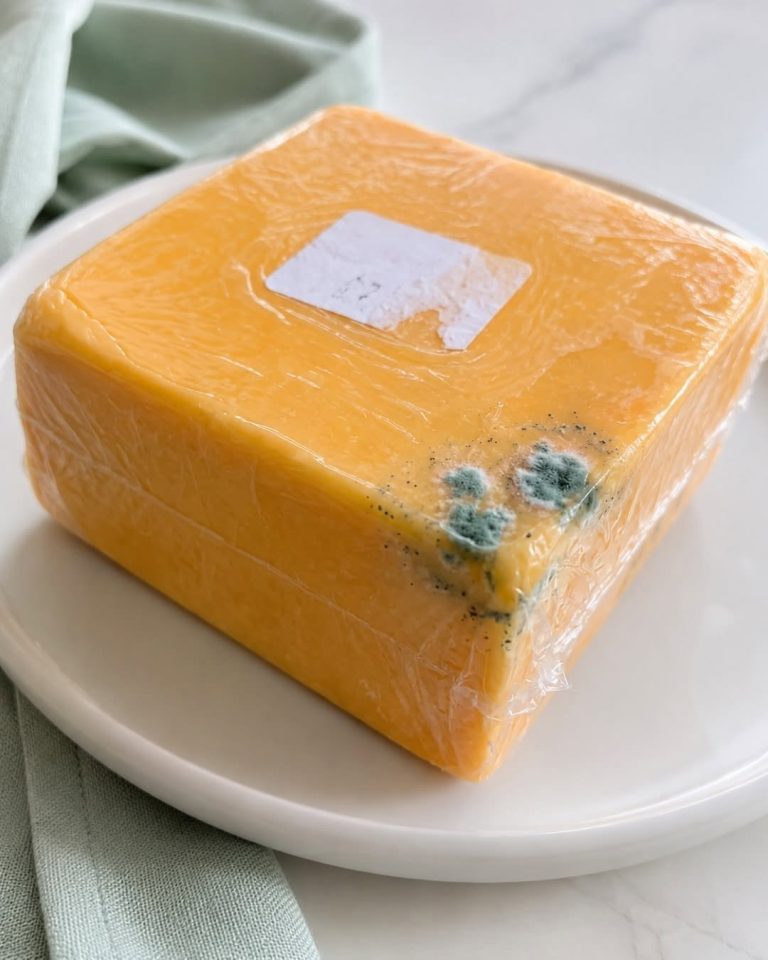
Hard cheeses (like cheddar):
- Dense structure
- Mold tends to stay on the surface
- Usually salvageable
Soft cheeses (like brie, ricotta, cream cheese):
- High moisture
- Mold spreads invisibly inside
- Not salvageable
So if this were brie? Different conversation. You’d be tossing it, no hesitation.
But cheddar gives you a little wiggle room.
Take a Closer Look (And Yes, Smell It)
Before you grab a knife, pause for a quick inspection. It takes 20 seconds and can save you from making the wrong call.
Look for:
- Multiple mold spots (not great)
- Odd colors like black, pink, or orange (worse)
- Any spreading beyond the obvious patch
Smell it:
- Sharp cheddar smell? Fine
- Sour, ammonia-like smell? That’s your sign to stop
Touch it:
- Still firm? Good
- Slimy or weirdly soft? Not good
If everything else looks normal, you’re probably in safe territory to trim it.
How to Cut It Off Without Making It Worse
Continued on next page: