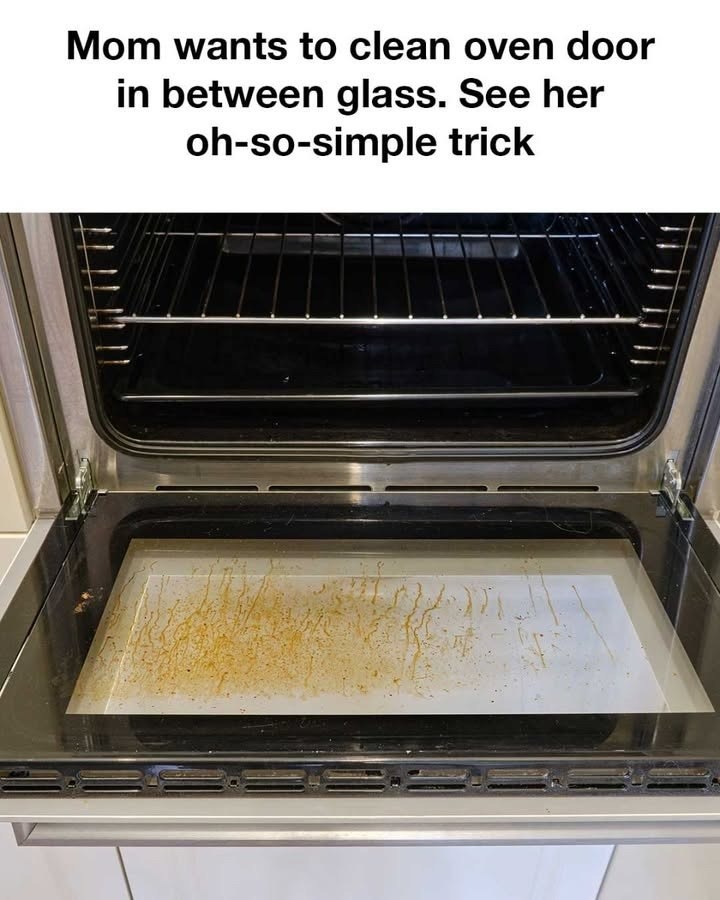
Once the space between the panels is finished, clean the accessible inside and outside surfaces.
For light soil, use warm water with a small amount of dishwashing liquid. Wipe with a soft cloth, rinse with a second damp cloth, and dry immediately.
For baked-on grease on the interior surface, place a warm, damp cloth over the mark for several minutes. This softens the residue and reduces the need for scrubbing.
A paste made from baking soda and water can sometimes help on suitable surfaces, but it should not be pushed into seams, vents, hinges, or trim. Check the manufacturer’s guidance before using it because certain coatings and self-cleaning surfaces require special care.
Do not use steel wool, abrasive pads, razor blades, or rough powders on the glass. Even tiny scratches may weaken the surface or make it harder to clean in the future.
When the Homemade-Wand Method Is Not Enough
Some stains are positioned where a cleaning wand cannot reach. In other ovens, the ventilation slots are too narrow or blocked by internal supports. The grease may also be baked so firmly onto the glass that gentle wiping does not remove it.
When this happens, the door may need to be removed and partially disassembled. Only follow this route when the appliance manual provides clear instructions for that exact model.
Oven doors are heavier than they look. Hinges are spring-loaded and can close suddenly or become damaged if handled incorrectly. Glass panels may also shift when screws or trim pieces are removed.
Ask another adult for help when lifting a door. Place it on a padded, stable surface and keep track of every spacer, screw, seal, and panel orientation.
If the instructions are confusing, professional appliance service is the safer choice. Paying for assistance is preferable to breaking a glass panel or damaging the hinges.
Mistakes to Avoid
The most common mistake is using too much liquid. The cloth should never be dripping wet, and cleaning solution should not be poured or sprayed into the door.
Another mistake is wrapping the tool loosely. A cloth trapped inside the door can be far more difficult to remove than the original dirt.
Do not force an oversized tool into a narrow vent. Pressure may bend the frame, disturb a seal, or scratch the glass.
Avoid cleaning while the oven is connected and warm. Heat can cause rapid evaporation, streaking, burns, and damage to the cloth or tool.
Do not assume that every visible screw is part of a removable cleaning panel. Some fasteners are essential to the door’s structure.
Finally, do not expect every old stain to disappear in one pass. Several gentle rounds are safer than one aggressive attempt.
How to Prevent New Buildup
Prevention is easier than cleaning between glass panels. Wipe spills from the exposed door glass as soon as the oven is cool. Grease that remains near the top edge can eventually travel toward the vents.
Keep roasting dishes covered when appropriate, but never block the oven’s internal airflow. Use trays that are large enough to catch bubbling sauces and drips.
Avoid hanging wet towels over the oven handle. Moisture and cleaning-product residue can run toward openings in the door.
When cleaning the control panel or stovetop, spray the cleaner onto a cloth rather than directly toward the appliance. This reduces the chance of liquid flowing into seams.
Inspect the door gasket regularly without pulling or stretching it. A damaged seal may allow excessive heat, steam, and grease to travel where they should not. Have a loose or torn gasket replaced according to the manufacturer’s recommendations.
A quick wipe every week prevents residue from becoming heavily baked. The oven does not need to look perfectly polished after every use, but removing fresh splashes saves considerable effort later.
A Simple Routine for a Clearer Oven Door
Cleaning between oven-door glass panels may look like a complicated repair, but some models allow the area to be reached through built-in ventilation openings. A slim, carefully wrapped tool can remove many cloudy streaks without taking the entire appliance apart.
The key is to work safely: confirm the manufacturer’s instructions, disconnect and cool the oven, use a secure microfiber covering, keep moisture to a minimum, and never force the tool.
A clean glass door makes it easier to monitor food without opening the oven and gives the entire appliance a better-maintained appearance. With gentle cleaning and regular prevention, grease has less chance to settle into those difficult hidden spaces again.