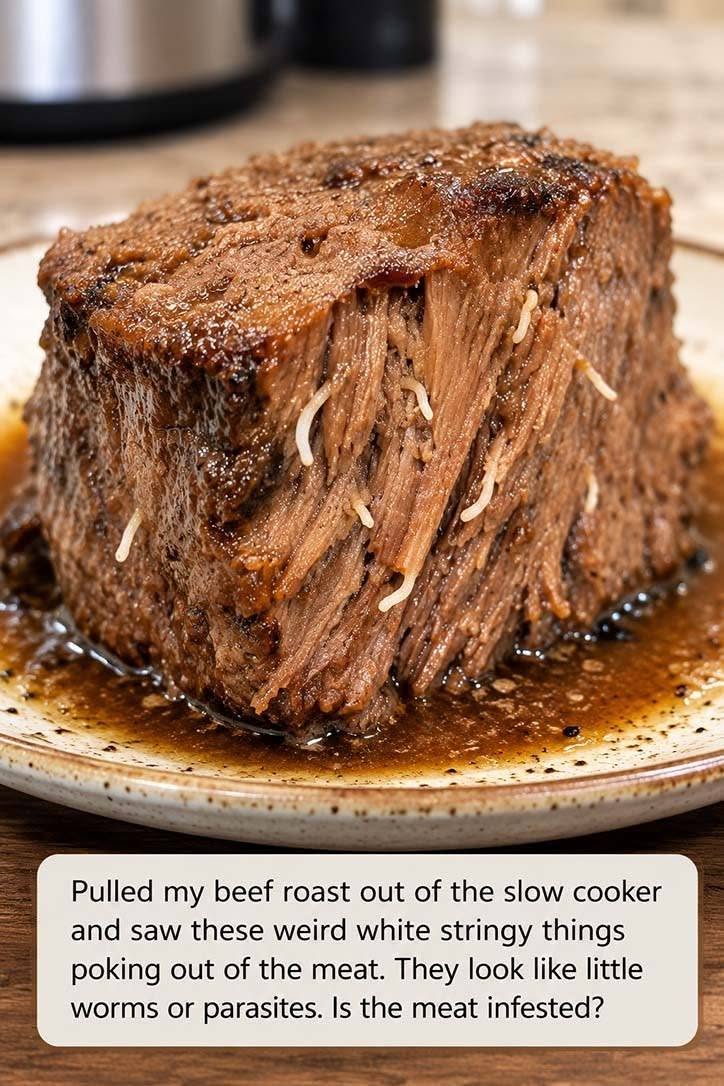
You lift the lid of your slow cooker after waiting hours for a beef roast to become tender.
The smell is wonderful. The meat looks juicy, and it practically falls apart when touched with a fork.
Then you notice something strange.
Tiny white or pale strands seem to be sticking out of the meat.
At first glance, they can look disturbingly similar to small worms.
For many home cooks, the immediate reaction is understandable:
“Is my beef infested with parasites?”
Before throwing the entire meal away, however, it is worth understanding what happens to beef during several hours of slow cooking.
In many cases, those pale strands are not worms at all. They are associated with the normal structure of meat—particularly connective tissue and collagen—which changes dramatically as a tough roast cooks slowly.
Still, appearance alone should never be used to declare questionable meat safe.
Here’s what you should know.
Why Beef Contains White Connective Tissue
A beef roast isn’t made entirely of red muscle.
Running between and around muscle fibers are different types of connective tissue. One of the major proteins associated with this tissue is collagen.
Collagen helps provide structure and strength.
Some beef cuts contain considerably more connective tissue than others because they come from muscles that were heavily used by the animal.
This is one reason cuts such as chuck and brisket are particularly well suited to long, slow cooking.
They may initially be tough, but time and heat can transform their texture.
What Happens to Collagen During Slow Cooking?
This is where the slow cooker becomes particularly useful.
During prolonged cooking in a moist environment, collagen gradually changes and can break down into gelatin.
That transformation contributes to the tender, rich texture associated with properly cooked pot roast, brisket, and other slow-cooked meats.
As the meat softens and its fibers separate, pale connective tissue can become much more visible.
Some portions may look:
- White
- Cream-colored
- Translucent
- Gelatinous
- Stringy
- Thread-like
Because the meat surrounding those strands has become darker during cooking, the pale tissue can stand out dramatically.
That’s often what creates the alarming “worm-like” appearance.
Why Can the Strands Suddenly Stick Out?
Continued on next page: