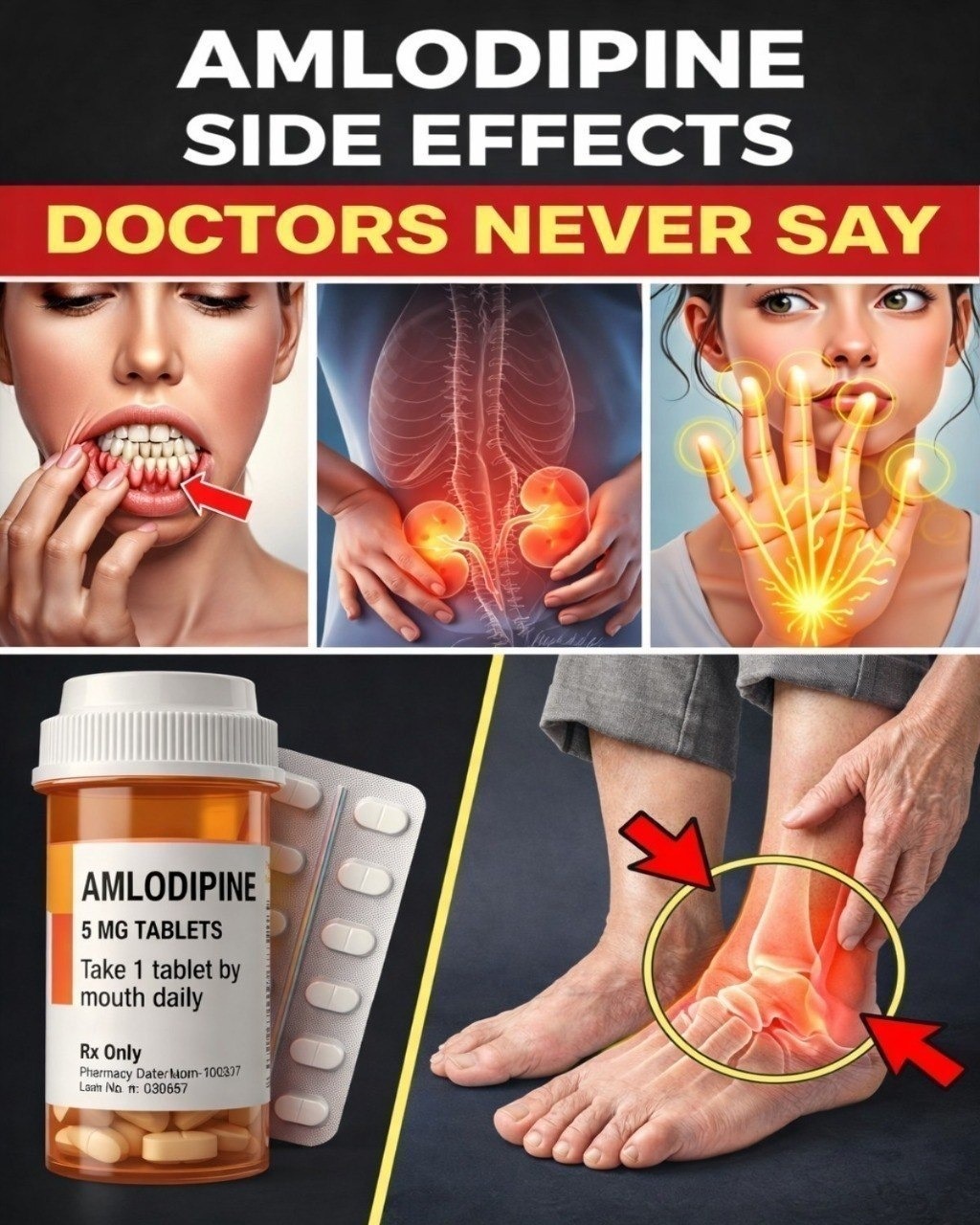
A less familiar effect of calcium channel blockers is gingival enlargement, sometimes called gingival hyperplasia. The gums may become swollen, thickened, tender, or more likely to bleed. Enlarged gum tissue can create spaces where plaque and food collect, increasing the risk of inflammation and dental problems.
Official amlodipine labeling includes gingival hyperplasia among reported gastrointestinal and oral adverse effects.
Brush gently twice daily with fluoride toothpaste, clean between the teeth, and attend regular dental appointments. Tell the dentist that you take amlodipine. Early professional cleaning and improved plaque control may reduce the severity.
Do not stop the medicine because of gum changes without speaking to the prescriber. A clinician and dentist can assess whether the dose or treatment should be changed.
10. Muscle Stiffness, Tremor, or Unusual Movements
Muscle stiffness, shaking, tremor, and abnormal movement have been reported in people taking amlodipine, although they are not among its most frequent reactions.
New tremors or stiffness should be discussed with a healthcare professional, particularly if they affect walking, writing, eating, or other daily activities. Other medicines, caffeine, thyroid disorders, neurological conditions, electrolyte changes, and anxiety can produce similar symptoms.
Urgent assessment is appropriate if abnormal movements develop suddenly with weakness on one side, facial drooping, speech difficulty, confusion, loss of balance, or a severe headache. Those may be signs of a stroke rather than an ordinary medication side effect.
11. Severe Rash or Allergic Reaction
Mild skin reactions can occur with many medicines, but a rapidly spreading rash, facial swelling, blistering, peeling skin, painful sores, or breathing difficulty may signal a serious reaction.
Emergency help is required if the lips, mouth, tongue, or throat swell; swallowing becomes difficult; breathing is tight or noisy; or the person feels faint. These are possible signs of anaphylaxis. The NHS also lists Stevens-Johnson syndrome—a rare but serious skin reaction involving blistering, painful sores, peeling skin, and flu-like symptoms—among severe reactions associated with amlodipine.
Do not take another dose while waiting for emergency guidance if a serious allergic reaction is suspected. Bring the medication packaging or an accurate list of medicines to the medical team.
12. Fainting or Severely Low Blood Pressure