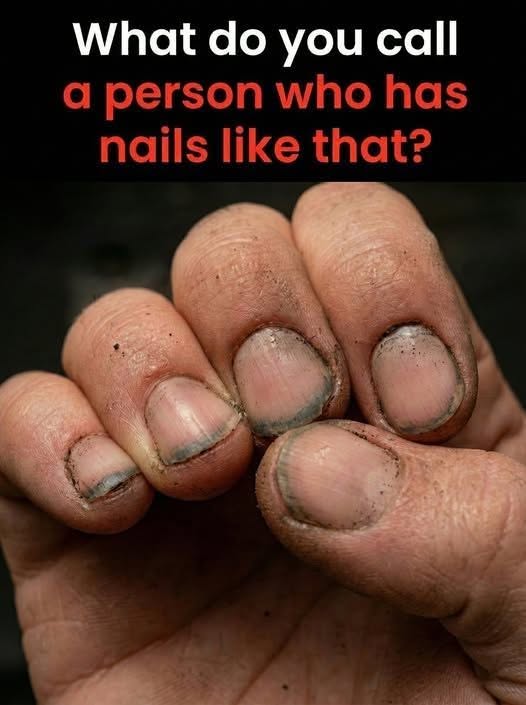

Dirty Nails: Neglect or Evidence of Hard Work?
First Reaction: Hygiene
At first glance, dirty nails are commonly linked to poor hygiene. From childhood, we’re taught the importance of keeping our hands clean. Germs can hide beneath fingernails. Bacteria spreads easily through touch. Washing hands properly and trimming nails are basic habits that protect both personal and public health.
In some cases, consistently dirty nails may signal neglect — especially if someone has access to water, soap, and time but chooses not to care for themselves. Cleanliness matters. It supports health, confidence, and social respect.
But that’s only part of the picture.
The Other Side: Honest Labor
Now consider another possibility.
Those nails might belong to:
A mechanic who has just finished fixing an engine
A gardener who spent hours working the soil
A construction worker mixing cement
A farmer gathering crops
A painter, plumber, electrician, or welder
In many types of manual work, dirt is not a flaw — it’s simply the result of effort. Some tasks stain the skin. Certain materials cling beneath the nails no matter how much you scrub. Sometimes the dirt you see is simply proof that someone has been building, repairing, planting, or creating.
In those situations, dirty nails are not a sign of carelessness. They are a sign of work.